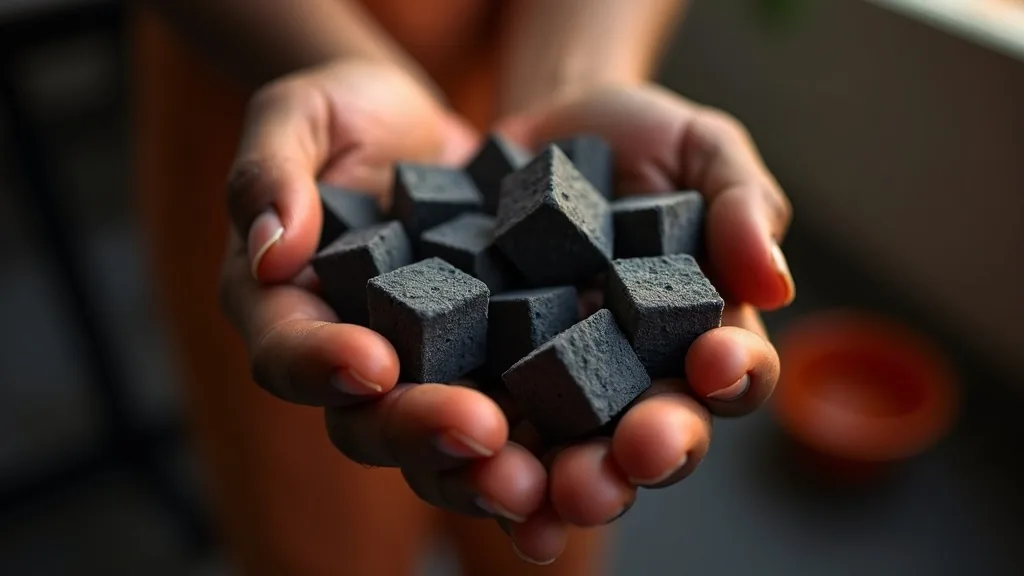
A private label shisha charcoal supplier produces coconut-shell cubes in Indonesia and packs them under your brand — your box design, your barcodes, your compliance labels. Through the Juara Holding Group BD desk, premium 25 and 26 mm cubes run an indicative USD 1,000-1,600 per metric ton FOB as of 2026, grade and volume dependent; a written quote confirms.
Shisha Charcoal Supplier is part of Juara Holding Group, an Indonesian group operating from Bali across Indonesia since 2015. Production comes from coconut-shell briquette workshops in Central Java around Magelang, Jepara, Semarang, and Yogyakarta, plus plants in Sulawesi — Indonesia is the world’s number-one producer of coconut-shell charcoal briquettes, which is why serious hookah brands build their labels here.
What Do You Get in a Private Label Program?
A real private label program is a brand build, not a sticker swap. Every deliverable below is scoped in your first consultation and locked in writing before any plate is made.
- Box design and dielines. Custom artwork for the 1 kg inner carton and 10 kg master box, adapted to standard Indonesian formats to avoid tooling surcharges.
- Barcodes. You register EAN/UPC codes under your own GS1 account; we place them on the dieline so retail scanning ties to your company, not ours.
- Multilingual and compliance labels. Arabic panels for GCC markets, EU-language panels with REACH-aware documentation, and warning text per destination, built into the artwork from day one.
- Packaging engineering. Heat-sealed inner bags or inner-plastic options with desiccants for humidity control, so cubes that leave Java at or below 5% moisture arrive that way.
- Spec sheet and per-lot COA. Typical lab-report ranges for premium Indonesian cubes: ash 1.6-2.5% (under 2.5% marks premium; top grades commonly 1.6-2.2%) and 2 to 2.5+ hour sessions under controlled conditions, with quality 25 mm cubes documented at 90-120 minutes per piece. Typical ranges, not promises — your lot COAs carry the contract numbers.
- Cube formats. 22, 25, 26, 27, and 28 mm cubes with custom sizes on request; 25 mm and 26 mm are the workhorse hookah formats most new brands launch with.
How Do MOQ Tiers Work by Market?
Minimums follow container math, not arbitrary policy. As of 2026 the common floor is one 20-foot container, though smaller entry points exist for brand testing.
| Tier | Volume | Best suited for |
|---|---|---|
| Trial / pallet lot | Program dependent, roughly 1-2 MT | Lounge pilots, retailer sampling, crowdfund fulfilment |
| One 20-ft container | About 18-18.5 MT unpalletized | Standard MOQ; first full branded run for one market |
| One 40-ft container | About 25.5 MT | Established brands; lowest per-kilo freight |
| Multi-container program | Scheduled quarterly slots | Distributors covering GCC plus EU on one artwork set |
Flexible MOQ programs for startup brands are a growing 2027 expectation, and the category keeps expanding — one 2026 market report projects roughly 7.1% annual growth for coconut-shell charcoal through 2034. Planning math: a 20-foot container of 10 kg master boxes works out to roughly 1,800 master cases, or about 18,000 branded 1 kg retail cartons per shipment.
What Does a Private Label Launch Cost?
Charcoal anchors the budget: premium coconut-shell shisha cubes run an indicative USD 1,000-1,600 per metric ton FOB as of 2026 — grade and volume dependent; a written quote confirms. For market context, published Indonesian supplier listings as of 2026 showed 100% coconut-shell charcoal around USD 950/MT FOB and coconut-wood mixes around USD 550/MT — observed listings, not our offer, and a sub-USD 600 “coconut” quote is a mixed-material warning sign for any premium label.
| Cost component | What drives it | How it is billed |
|---|---|---|
| Charcoal, FOB Indonesian port | Grade, cube size, order volume | Per MT; USD 1,000-1,600 indicative as of 2026 |
| Artwork and dieline design | SKU count, number of languages | One-time, quoted per project |
| Printing plates and setup | Print method, color count | One-time per design version |
| Custom inner and master cartons | Board grade, finish, heat-seal bags | Per unit, folded into the packed price |
| Compliance labels and translations | Destination market requirements | Quoted per market |
| Sea freight and insurance | Route, season, carrier | At cost via your forwarder; FOB excludes it |
Barcodes cost only your GS1 registration fee, paid directly to GS1 and kept whatever supplier you use. Every non-charcoal line is confirmed in the written quotation before any deposit moves.
How Long Does a Brand Launch Take?
Plan the first branded container as a quarter-length project, with faster repeats once plates exist. The windows below are typical planning figures; the written quote confirms dates against factory slots.
| Stage | Typical window | What happens |
|---|---|---|
| Consultation and spec lock | Weeks 1-2 | Market, cube size, grade, and packaging config agreed; samples arranged |
| Artwork, proofs, plates | Weeks 2-5 | Dielines, barcodes, and every language panel approved; plates made |
| Production and branded packing | Weeks 5-9 | Cubes pressed, dried, packed into your cartons with desiccants |
| QC and documents | Final production week | Per-lot COA, batch codes, invoice, packing list, certificate of origin |
| Loading and sea freight | After balance terms met | Weeks to the UAE, longer to Europe; confirm schedules with your forwarder |
Loading runs through the main charcoal ports — Tanjung Mas in Semarang, Tanjung Priok in Jakarta, or Tanjung Perak in Surabaya. Order well ahead of Ramadan and festival peaks: those windows compress factory slots and vessel space, and one late artwork approval can cost you a sailing.
How Does Ordering Work?
- Book a starter consultation. Message the BD desk on WhatsApp or email with your destination market, cube size, and volume. Samples can be delivered in Bali, with meetings near Ngurah Rai or Denpasar; factory visits to Java and Sulawesi are arranged from Bali.
- Lock samples and specs. Burn-test the cubes yourself, review the typical lab ranges, then fix grade, size, and packaging configuration in writing.
- Approve artwork and proofs. Sign off dielines, barcodes, and every language panel before plates are made — later changes cost plate fees and calendar days.
- Place the deposit. Common payment norms as of 2026 are telegraphic transfer or letter of credit, frequently 30% deposit with 70% against bill-of-lading copy.
- Production, QC, and documents. Lots ship with commercial invoice, packing list, certificate of origin, bill of lading, fumigation certificate where required, and MSDS/SDS on request. Charcoal moves as general sea cargo; air freight faces restrictions.
- Balance and release. Pay the balance against the bill-of-lading copy; documents release and your first branded container sails.
Start Your Private Label Consultation
Bring a brand name and a target market; the BD desk brings the factory network, packaging engineering, and export paperwork. The consultation is free and ends with a written scope — deliverables, MOQ tier, timeline, and confirmed pricing — not a pressure pitch.
- WhatsApp: +62 811-3941-4563
- Email: [[email protected]](mailto:[email protected])
- Or send the quote form on the contact page with your destination market and cargo plan
Shisha Charcoal Supplier is part of Juara Holding Group — an Indonesian group operating from Bali across Indonesia since 2015.
Frequently Asked Questions
Can I put my own brand on every layer of packaging?
Yes. The 1 kg inner cartons, 10 kg master boxes, heat-sealed inner bags, and shipping marks can all carry your artwork. You supply barcodes from your own GS1 registration so retail scanning ties to your company, not the supplier. Custom cube stamps are possible on request, though most new brands launch with printed cartons only.
Who owns the artwork and barcodes in a private label deal?
You do. Your design files, brand name, and GS1 barcodes stay your property; the supplier prints them under instruction and does not resell your packaging to other buyers. Keep source files and dielines archived on your side, and confirm exclusivity terms for your destination market in the written agreement before the first run.
Can a startup brand order less than a full container?
Sometimes. The standard minimum as of 2026 is one 20-foot container, roughly 18-18.5 metric tons unpalletized. Some Indonesian suppliers accept pallet or trial-lot orders, and flexible MOQ programs for startup brands are a growing 2027 expectation. Ask the BD desk about trial lots before committing a launch budget to a full container.
Do EU and GCC markets need different private label packaging?
Plan separate label versions from the start. As of 2026, EU buyers increasingly expect REACH-aware documentation and ingredient transparency, while GCC markets scrutinize additives and emissions and commonly require Arabic panels. Designing both versions into one dieline family upfront is far cheaper than reprinting plates after your first market audit.