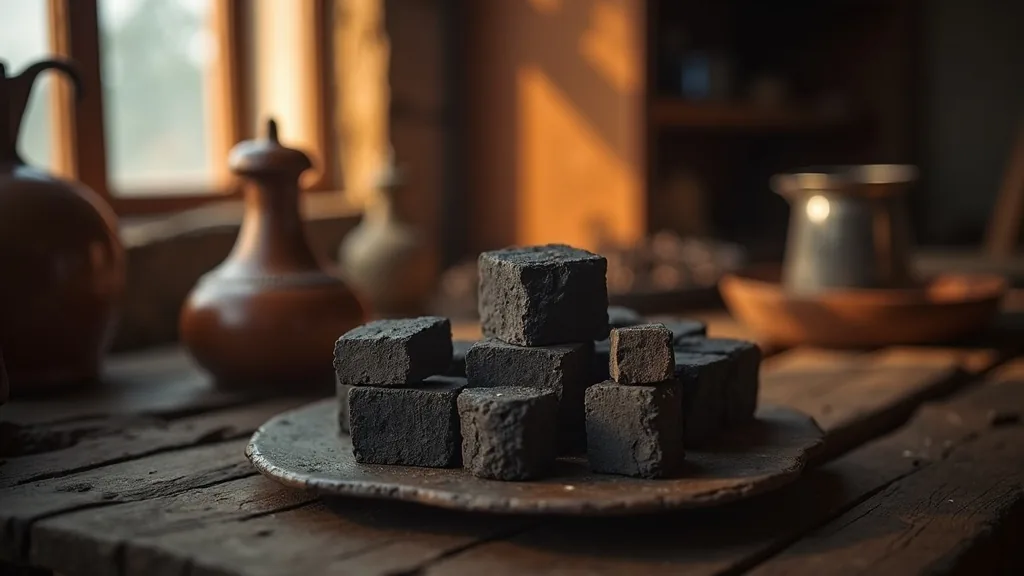
Ask any long burn shisha charcoal cubes supplier one question before price: where is the test data? Our Indonesian coconut-shell cubes, pressed in Java and Sulawesi workshops, typically document 2 to 2.5+ hours per session under controlled lab conditions, with quality 25mm pieces logging 90-120 minutes each — ash 1.6-2.2% on premium grades, verified lot by lot.
“Long burn” is the most abused phrase in charcoal marketing; anyone can print it on a master box. A supplier worth a container commitment shows you the protocol behind the number, the factors that produce it, and a sample you can time yourself before wiring a deposit.
Why Buy Long-Burn Cubes From Indonesia?
Indonesia is the world’s number-one producer of coconut-shell charcoal briquettes. Raw shells come heavily from Sulawesi, and briquetting concentrates in Central Java workshops around Magelang, Jepara, Semarang, and the Yogyakarta area, plus plants in Sulawesi itself. Coconut shell carbonizes into a dense, high-fixed-carbon char that holds heat far longer than softwood or quick-light products. One 2026 market report puts natural coconut charcoal at 35-55% less ash than quick-light alternatives and projects roughly 7.1% annual growth for the category from 2026 through 2034 — lounges are switching for exactly the burn-time and low-odor reasons this page covers.
How Long Do the Cubes Actually Burn?
Burn time scales with cube mass, so size is your first lever. Indonesian workshops press 22, 25, 26, 27, and 28 mm cubes as standard, with custom sizes on request. The figures below are typical lab-report ranges under controlled conditions — treat them as documented norms, not per-shipment promises.
| Cube size | Typical burn behavior (lab conditions) | Best fit |
|---|---|---|
| 22x22x22 mm | Shortest per-piece window of the range; faster heat-up | Small bowls, quick cafe turnover |
| 25x25x25 mm | 90-120 minutes per piece documented on quality grades; 2-2.5+ hour sessions with rotation | The workhorse lounge format |
| 26x26x26 mm | Upper end of the 25mm band — about 12% more charcoal mass per cube | Lounges wanting fewer coal changes |
| 27-28 mm | Longest per-piece window; heavier heat output | Large bowls, experienced heat management |
| Custom | Pressed to order | Private-label programs |
Session length also depends on your side of the bowl: heat-management device versus foil, wind exposure, and how early coals are rotated. That is why we convert buyers on a timed sample, not an adjective.
What Does a Documented Burn Test Look Like?
A serious long burn shisha charcoal cubes supplier runs the same protocol on every evaluated lot. Ours follows six steps:
- Condition the sample. Cubes rest sealed at room humidity; moisture is checked against the 5% maximum before any flame touches them.
- Time the ignition. Cubes go on an electric burner and the minutes to full ash-over are logged — slow ignition often signals over-compression or excess moisture.
- Simulate a session. Lit cubes sit under a heat-management device and the usable heat window is recorded, not just total glow time.
- Track weight loss. Cubes are weighed at intervals so the burn curve shows steady output rather than a fast spike and early fade.
- Weigh the residue. Final ash is measured against the typical 1.6-2.5% band; under 2.5% marks premium, and top grades commonly land at 1.6-2.2%.
- Log drop-test compression. Cubes that crumble in transit never reach the bowl, so compression strength is part of the burn file.
As of 2026, buyers increasingly ask for this as a per-lot COA covering ash, moisture, fixed carbon, and drop-test results, with traceable batch codes — a documentation standard we expect to be non-negotiable by 2027, and one we already work to.
What Makes One Cube Outlast Another?
| Factor | Effect on burn time |
|---|---|
| Compression density | Higher press pressure packs more carbon per cube — the single biggest lever |
| Fixed carbon content | Well-carbonized Sulawesi shell char sustains heat longer than mixed or under-fired feedstock |
| Moisture at or below 5% | Wet cubes waste early burn minutes boiling off water and can crack |
| Ash content | Lower ash (1.6-2.2% typical on premium) means more of the cube is combustible carbon |
| Natural binders only | Starch-based binding without chemical accelerants burns steadily, low-odor, spark-free |
| Cube geometry | Larger cubes have less surface area per gram, slowing the burn |
Density has a ceiling, though. Over-compressed cubes ignite slowly and can run cooler than lounges want, which is why our protocol times ignition as strictly as it times total burn.
What Does Long-Burn Grade Cost?
| Item | Detail (as of 2026) |
|---|---|
| Premium long-burn cube, FOB | USD 1,000-1,600 per metric ton — indicative, as of 2026, grade and volume dependent; written quote confirms |
| Market context | Published Indonesian listings showed 100% coconut-shell around USD 950/MT FOB and coconut-wood mix around USD 550/MT — observed listings, not our offer |
| MOQ | Commonly one 20-ft container, roughly 18-18.5 MT unpalletized; a 40-ft carries about 25.5 MT |
| Trial lots | Pallet and trial-lot orders possible; flexible startup MOQ programs are a growing 2027 expectation |
| Packaging | 10 kg master box holding 1 kg inner cartons; heat-sealed inner bags and desiccants for humidity control |
| Payment norms | Telegraphic transfer or letter of credit; frequently 30% deposit, 70% against bill-of-lading copy |
The coconut-wood mixes behind the cheapest listings burn shorter and ash heavier — the gap between USD 550 and the premium band is largely the burn time you are reading this page for.
How Does a Burn-Test Sample Order Work?
- Send your spec. Cube size, monthly volume, destination port, and target burn window — by WhatsApp or the form below.
- We match the grade. Our sourcing desk selects lots from vetted workshops in Java and Sulawesi against your spec, with current lab sheets attached.
- Sample handover. Courier dispatch to your market, or hand delivery in Bali — we regularly meet buyers near Ngurah Rai and Denpasar.
- You run the timer. Test under your own heat-management setup; we send the protocol sheet so your numbers and our lab ranges compare like for like.
- Written quote and booking. Confirmed FOB pricing, then loading from Tanjung Mas (Semarang), Tanjung Priok (Jakarta), Tanjung Perak (Surabaya), or Belawan (Medan), with the full document pack: invoice, packing list, certificate of origin, bill of lading, fumigation certificate where required, MSDS on request. Sea freight runs weeks to the UAE and longer to Europe, so order ahead of Ramadan and festival peaks.
Request a Burn-Test Sample
Time our cubes against whatever you burn today. Message the BD desk at Juara Holding Group — an Indonesian group operating from Bali across Indonesia since 2015 — with your cube size and volume, and we will arrange a sample plus the matching lab sheet.
- WhatsApp: +62 811-3941-4563
- Email: [email protected]
- Or use the quote form below — name, email, destination port, cargo volume, and message land on the same desk, answered within one business day.
[csh_qf]
Frequently Asked Questions
How long should a 26mm shisha charcoal cube burn?
Typical lab reports on quality Indonesian 25mm cubes document 90-120 minutes per piece, and a 26mm cube carries roughly 12% more charcoal mass, so it sits at the upper end of that band. Full sessions run 2 to 2.5+ hours with rotation. Treat these as controlled-condition ranges and ask any supplier for the specific lot’s test data.
Can a supplier guarantee an exact burn time for every shipment?
No honest supplier guarantees a fixed burn time, because shell batches, humidity, and your heat management all shift results. What a serious long-burn supplier can do is document typical ranges per lot — ash, moisture, fixed carbon, burn window — on a COA with traceable batch codes. As of 2026, that per-lot paperwork is fast becoming a standard procurement requirement.
Does higher density always mean a longer burn?
Mostly, but not endlessly. Higher compression packs more carbon into each cube, which extends the burn, yet over-compressed cubes ignite slowly and can run cooler than lounges want. The workable balance is a dense cube with moisture at or below 5% and natural binders, verified through timed ignition and weight-loss testing rather than density claims alone.
What burn-time documentation should I request before ordering a container?
Ask for the supplier’s written burn-test protocol, a recent lab report covering ash, moisture, and fixed carbon, drop-test compression results for transit durability, and a per-lot COA commitment for your shipments. Then time a physical sample under your own heat-management setup — your lounge conditions, not the lab’s, decide the session length your customers experience.