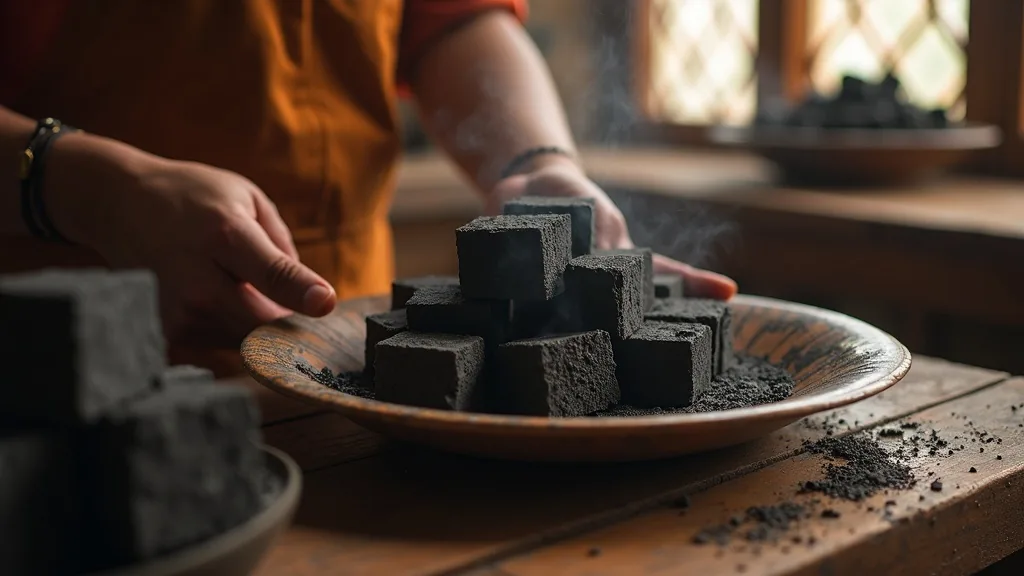
A low odor shisha charcoal supplier delivers coconut-shell cubes pressed with natural starch binders — no chemical accelerants, no lighter-fluid smell drifting across the lounge floor. Indonesian 25mm and 26mm cubes typically show 1.6–2.5% ash and burn 2–2.5+ hours per session, at an indicative FOB of USD 1,000–1,600 per metric ton as of 2026, grade and volume dependent; a written quote confirms.
Why Does Low Odor Matter for Lounge Indoor Air?
A hookah lounge lives or dies on its air. Guests who walk into a chemical smell don’t order a second bowl, and staff working eight-hour shifts under an acrid haze don’t stay through the season. As of 2026, lounges in the GCC and Europe are responding to indoor-air-quality concerns by asking suppliers for lab-tested low-odor product files — odor has moved from a taste preference to a procurement criterion.
The smell problem almost always traces to two sources: chemical accelerants added so coals light in seconds, and filler material — coconut-wood mixes or under-carbonized shell — that releases sharp smoke as it burns. One 2026 market report puts natural coconut charcoal at 35–55% less ash than quick-light alternatives, and ash volume tracks closely with what your guests smell.
Indonesia is the world’s number-one producer of coconut-shell charcoal briquettes, which is why serious low-odor sourcing starts here. Raw shells come heavily from Sulawesi; briquetting concentrates in Central Java workshops around Magelang, Jepara, Semarang, and the Yogyakarta area, with additional plants in Sulawesi.
What Makes a Coconut Cube Genuinely Low Odor?
Three production choices separate a neutral-smelling cube from a sour one:
- 100% coconut shell, fully carbonized. Wood mixes and rushed carbonization leave volatile compounds that cook off in the bowl. Full carbonization means almost nothing is left to smell.
- Natural starch binder, zero accelerants. Tapioca-family binders hold the cube together without the solvent note quick-light coals give off. The trade-off is honest: natural cubes need a few extra minutes on a proper burner.
- Moisture at or below 5%. Damp cubes hiss, spark, and smoke before they settle. Dry cubes light clean and hold heat evenly.
The result, in typical lab-report terms rather than promises: ash of 1.6–2.5%, with under 2.5% marking premium and top grades commonly 1.6–2.2%; low smoke; spark-free behavior; and burn times of 90–120 minutes per quality 25mm piece under controlled conditions.
What Specs and Prices Should Lounge Buyers Expect?
| Option | Cube sizes | Typical ash (lab range) | Typical burn | Indicative FOB, as of 2026 |
|---|---|---|---|---|
| Premium low-odor cube | 25/26mm workhorse; 22–28mm on request | 1.6–2.2% | 90–120 min per 25mm piece; 2–2.5+ hr session | USD 1,000–1,600/MT — grade and volume dependent; written quote confirms |
| Premium threshold grade | 25/26mm | under 2.5% | 2+ hr session | Same band; exact figure set by written quote |
| Market context: 100% coconut listings | varies | varies by lot | varies | around USD 950/MT (observed 2026 listings, not our offer) |
| Market context: coconut-wood mix | varies | higher, odor-prone | shorter | around USD 550/MT (observed 2026 listings — where odor complaints usually start) |
Volume and packaging norms as of 2026: minimum order is commonly one 20-foot container at roughly 18–18.5 metric tons unpalletized, while a 40-foot container carries about 25.5 metric tons. Pallet and trial-lot arrangements exist for startup brands. Standard packaging is a 10 kg master box holding 1 kg inner cartons, with heat-sealed inner bags and desiccants — humidity control matters for odor, because damp charcoal smokes.
How Do You Verify Odor Claims Before Ordering?
Never commit a container on a spec sheet alone. Run this five-step protocol on physical samples:
| Step | What to do | Pass sign | Red flag |
|---|---|---|---|
| 1. Cold sniff | Smell the cube straight from the inner carton | Faint, dry carbon note | Ammonia, solvent, or sour smell |
| 2. First light | Ignite on an electric burner, watch 3–5 minutes | Thin, brief smoke that clears | Thick white acrid smoke, sparking |
| 3. Session test | Run a full bowl with unflavored or lightly flavored tobacco | Neutral room air, steady heat | Chemical aftertaste, headache complaints |
| 4. Ash check | Let one cube burn out completely | Compact light-grey ash, low volume | Heavy, dark, crumbly ash |
| 5. Paper check | Compare the lot COA against what you burned | Ash, moisture, fixed carbon match | No COA, no batch code, “trust us” |
The paper trail matters as much as your nose. As of 2026, buyers are shifting toward protocol-backed specs: per-lot COAs covering ash, moisture, fixed carbon, and drop-test compression; third-party heavy-metal and PAH testing; and traceable batch codes. EU buyers increasingly expect REACH-aware documentation, and GCC scrutiny of additives and emissions is tightening. A supplier who cannot produce these documents for the exact lot you sampled is asking you to gamble your lounge’s air on a brochure.
How Does the Sample Sniff-Test Pack Work?
- Message the BD desk. WhatsApp +62 811-3941-4563 with your venue type, monthly volume, and destination port.
- Receive grade sheets. Typical lab ranges, cube-size options, and a sample COA for the grades that fit your brief.
- Sniff-test pack dispatched. 1 kg inner cartons of one or two candidate grades — by courier internationally, or hand delivery in Bali with a meeting near Ngurah Rai or Denpasar if you’re on the island.
- Run the five-step protocol. Take a week; test across shifts and let your floor staff judge the room air.
- Confirm and quote. Lock grade, cube size, packaging, and private-label artwork, then receive a written pro-forma quote — the quote, not this page, sets your price.
- Produce and ship. Common terms as of 2026 are telegraphic transfer or letter of credit, frequently 30% deposit with 70% against bill-of-lading copy, loading from Tanjung Mas (Semarang), Tanjung Priok (Jakarta), or Tanjung Perak (Surabaya). Sea freight runs weeks to the UAE and longer to Europe, so order ahead of Ramadan and festival peaks.
Ready to Sniff-Test Before You Commit?
Send one WhatsApp message to +62 811-3941-4563 — tell the Juara Holding Group BD desk your city, venue type, and rough monthly volume, and a sample sniff-test pack goes into motion. Prefer email? Write to [email protected]. Factory visits to Java and Sulawesi workshops can be arranged from Bali. Part of Juara Holding Group — an Indonesian group operating from Bali across Indonesia since 2015.
Frequently Asked Questions
How can I test if shisha charcoal is really low odor before ordering?
Request a sample sniff-test pack and run three checks: smell the cold cube (a faint dry carbon note only — no ammonia or solvent), watch the first-light smoke on an electric burner (thin and brief, not white and acrid), then run a full unflavored session. Cross-check what you burned against the lot’s COA for ash, moisture, and fixed carbon.
What makes coconut shisha charcoal lower odor than quick-light coals?
Quick-light coals carry chemical accelerants that ignite fast but leave a solvent smell in the room. Natural coconut cubes use starch binders and fully carbonized 100% shell, so little volatile material remains to burn off. One 2026 market report measured 35–55% less ash versus quick-light alternatives, and lower ash generally means less smoke and smell.
Does low odor shisha charcoal cost more than standard grades?
Premium low-odor coconut cubes from Indonesia run an indicative FOB of USD 1,000–1,600 per metric ton as of 2026, grade and volume dependent; a written quote confirms. Observed 2026 listings showed coconut-wood mixes near USD 550 per ton, but mixes are where odor complaints usually start — the premium buys cleaner room air and calmer staff.
What documents prove a supplier’s low odor claims?
Ask for per-lot COAs covering ash, moisture, fixed carbon, and drop-test compression, plus third-party heavy-metal and PAH testing and traceable batch codes — expectations buyers increasingly hold as of 2026. The standard export pack adds a commercial invoice, packing list, certificate of origin, bill of lading, fumigation certificate where required, and MSDS/SDS on request.
Can I get a low odor sample pack delivered in Bali?
Yes. Samples can be handed over in Bali with a meeting near Ngurah Rai or Denpasar, while production stays in Java and Sulawesi workshops. International courier dispatch is available for lounge buyers abroad. Message the BD desk on WhatsApp +62 811-3941-4563 with your address, preferred cube size, and the grades you want to compare.