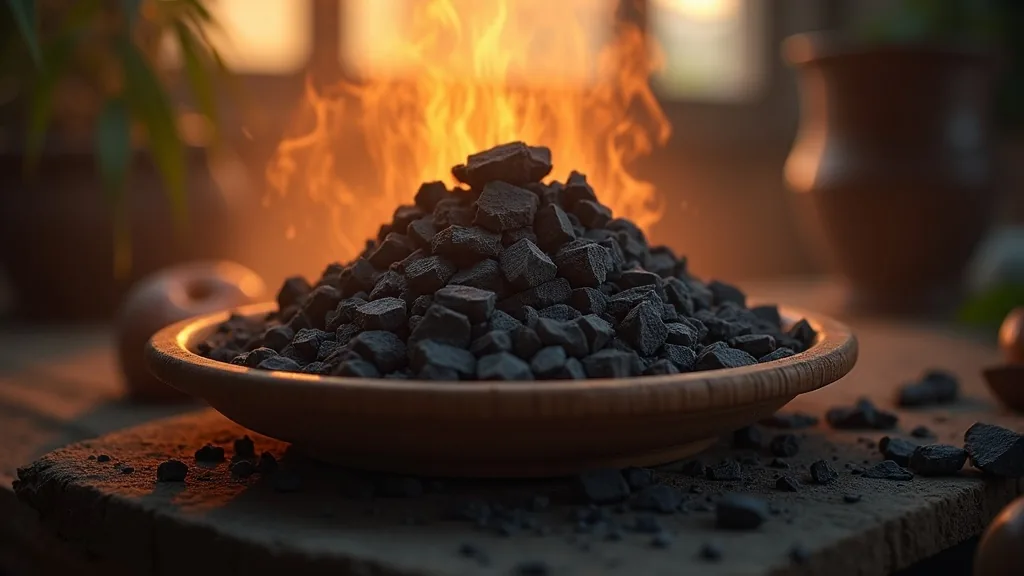
A Bali shisha charcoal supplier for export works best as a coordination desk: production stays in Java and Sulawesi, while quoting, sample checks, and consultations happen near Ngurah Rai. Juara Holding Group’s BD desk in Bali quotes FOB, CIF, and CFR, consolidates cargo from vetted plants, and prepares the full export document pack.
Why run shisha charcoal export from Bali?
Indonesia is the world’s number-one producer of coconut-shell charcoal briquettes. Raw shells are drawn heavily from Sulawesi, and briquetting concentrates in Central Java workshops around Magelang, Jepara, Semarang, and the Yogyakarta area, with further plants in Sulawesi. None of that production sits in Bali — which is exactly why a Bali desk earns its keep.
Bali is where international buyers already land. A lounge owner or distributor passing through can meet the desk near Ngurah Rai or in Denpasar, burn-test 25 mm and 26 mm sample cubes, and agree terms face to face while the desk coordinates plants, trucking, and port slots a sea away. Factory visits to Java and Sulawesi are arranged from Bali when you want to stand on the briquetting floor yourself. One accountable counterpart, in a city you actually visit.
Which Incoterms and price basis can you quote?
Three terms cover almost every shisha charcoal shipment, and each is quoted in writing before anything is booked.
| Term | What the price includes | Indicative basis (as of 2026) |
|---|---|---|
| FOB | Cargo cleared and loaded at the Indonesian port; you book sea freight | USD 1,000–1,600/MT, premium coconut-shell cubes |
| CFR | FOB scope plus sea freight to your destination port | FOB base + lane freight, quoted per shipment |
| CIF | CFR scope plus marine insurance to destination | FOB base + freight + insurance, quoted per shipment |
Every figure above is indicative, as of 2026, grade and volume dependent; a written quote confirms. For market context only, published Indonesian supplier listings as of 2026 showed 100% coconut-shell charcoal offered around USD 950 per metric ton FOB and coconut-wood mixes around USD 550 — observed listings, not our offer, but a useful sanity check when a competing price looks improbably low.
Container math matters as much as the per-ton rate. As of 2026 the common minimum order is one 20-foot container at roughly 18–18.5 metric tons unpalletized; a 40-foot carries about 25.5 metric tons. Standard packing is a 10 kg master box holding ten 1 kg inner cartons, with heat-sealed inner bags and desiccants available for humid lanes. Pallet and trial-lot arrangements exist for startup brands and are quoted case by case.
How is cargo consolidated from Java and Sulawesi?
The desk starts from your spec — cube size, ash ceiling, packaging, private-label artwork — and matches it to vetted workshops in Central Java or plants in Sulawesi that hold that grade in current production. Typical lab-report ranges for premium cubes run 1.6–2.5% ash and moisture at or below 5%; treat those as documented ranges, never as blanket promises, and ask for the per-lot COA.
Single-plant lots are preferred because traceability stays clean. When volume needs two sources, lots keep separate batch codes and separate quality paperwork inside one container. That discipline is turning from nice-to-have into procurement requirement: as of 2026, buyers heading into 2027 increasingly demand per-lot COAs covering ash, moisture, fixed carbon, and drop-test compression, plus traceable batch codes an auditor can follow.
Which Indonesian ports can your container load from?
| Port | City / region | Typical role for shisha charcoal |
|---|---|---|
| Tanjung Mas | Semarang, Central Java | Closest gate to the Magelang–Jepara–Semarang workshop belt |
| Tanjung Priok | Jakarta | Widest sailing schedule; consolidated or urgent cargo |
| Tanjung Perak | Surabaya, East Java | East Java staging and some Sulawesi-linked routings |
| Belawan | Medan, North Sumatra | Used when Sumatra routing makes lane sense |
Charcoal ships as general cargo by sea; air freight faces restrictions, so build sea lead times into your calendar. Sailings run weeks to the UAE and longer to Europe, and Ramadan plus festival peaks pull stock forward — order ahead of the season, not into it. One practical warning: do not assume an HS code from a marketing page or forum thread; confirm classification and any destination-side rules with your forwarder before booking.
What documents come with every shipment?
| Document | What it does |
|---|---|
| Commercial invoice | Declares value for customs and payment |
| Packing list | Box count, weights, container details |
| Certificate of origin | Confirms Indonesian origin for tariff treatment |
| Bill of lading | Title document; triggers the balance payment |
| Fumigation certificate | Issued where the destination requires it |
| MSDS/SDS | Supplied on request for carriers and importers |
| Per-lot COA | Ash, moisture, fixed carbon, drop test where agreed |
Payment norms as of 2026 are telegraphic transfer or letter of credit, most commonly a 30% deposit with the 70% balance against the bill-of-lading copy. Terms are fixed in the written quote, and the document pack is scanned to you before originals courier out.
How does an export consultation work?
- Send the brief. WhatsApp or email your destination, monthly volume, cube size, and any private-label plans. Two lines are enough to start.
- Spec and lane review. The desk maps your ash and burn-time targets to available grades and checks the sensible load port for your destination.
- Written quote. FOB, CFR, or CIF, with packing spec, production window, and payment terms — the quote is the offer, nothing verbal.
- Sample check. Cubes are delivered in Bali for a meeting near Ngurah Rai, or couriered to you; burn them, weigh the ash, then decide.
- Deposit and production. On the agreed deposit, production and consolidation are scheduled at the matched Java or Sulawesi plants.
- Loading and documents. The container loads at the agreed port; you receive the BL copy and full pack, and the balance settles per the quote.
Book an export consultation with the Bali BD desk. One conversation covers grade, Incoterm, port, and timeline; a written quote follows. WhatsApp +62 811-3941-4563 or email [[email protected]](mailto:[email protected]). Part of Juara Holding Group — an Indonesian group operating from Bali across Indonesia since 2015.
Frequently Asked Questions
Can I check samples in Bali before booking an export container?
Yes. Sample cubes from current production lots are delivered in Bali, with meetings arranged near Ngurah Rai or in Denpasar. You can weigh, burn, and ash-check 25 mm and 26 mm cubes before committing to a container. When you want to see the briquetting lines themselves, factory visits to Java and Sulawesi plants are arranged from Bali.
Do you quote CIF to the UAE and Europe, or FOB only?
All three main terms are supported: FOB at the Indonesian load port, CFR adding sea freight to your destination, and CIF adding marine insurance on top. As of 2026, premium coconut-shell cube pricing is indicative at USD 1,000–1,600 per metric ton FOB — grade and volume dependent; a written quote confirms — with CFR and CIF built per lane.
How does consolidation from Java and Sulawesi plants actually work?
Your order is matched to vetted workshops in Central Java or plants in Sulawesi holding your grade, then cargo stages at the most efficient port — often Tanjung Mas in Semarang for Java lots. A 20-foot container carries roughly 18–18.5 metric tons unpalletized, a 40-foot about 25.5, and mixed cube sizes can share one box with separate batch codes.
What payment terms do you accept for export orders from Bali?
As of 2026 the common norms are telegraphic transfer or letter of credit, most often a 30% deposit with the 70% balance paid against the bill-of-lading copy. Exact terms depend on order size, destination, and history, and they are fixed in the written quote before production is scheduled — never renegotiated mid-shipment.