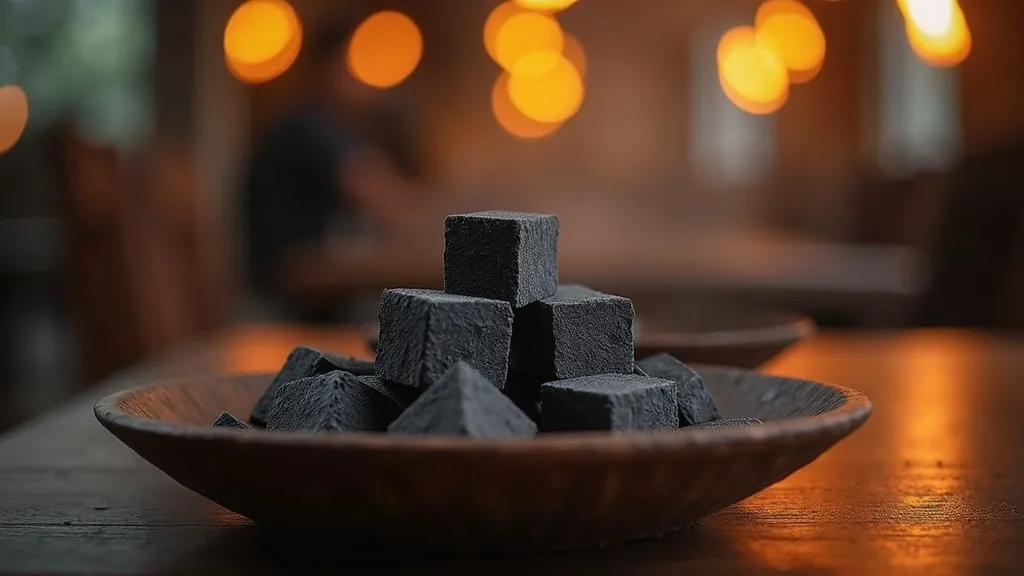
The right hookah charcoal supplier in Indonesia gives a lounge the same cube every shipment: 25 or 26 mm coconut-shell cubes, ash under 2.5%, sessions running 2 to 2.5+ hours, and palletized recurring supply. Premium cubes run an indicative FOB USD 1,000-1,600 per metric ton as of 2026 — grade and volume dependent; a written quote confirms.
This page is written for two buyers: the lounge group that burns through master boxes weekly, and the distributor feeding a network of them. Both problems reduce to the same three words — consistency, calendar, paperwork.
Why Do Lounges and Distributors Source From Indonesia?
Indonesia is the world’s number-one producer of coconut-shell charcoal briquettes. Raw shells are drawn heavily from Sulawesi, and briquetting concentrates in Central Java workshops around Magelang, Jepara, Semarang, and the Yogyakarta area, with additional plants in Sulawesi. That production density is why the 25 mm and 26 mm cubes on most lounge trays worldwide trace back to Java.
The performance case is measurable. One 2026 market report puts natural coconut charcoal at 35-55% less ash than quick-light alternatives, and projects roughly 7.1% annual growth for coconut-shell charcoal from 2026 through 2034. For a lounge floor, less ash means fewer bowl interruptions, cleaner heat management, and less staff time spent knocking spent coals off mid-session.
What Does Batch Consistency Actually Look Like?
A busy lounge cannot retrain heat management every time a new shipment lands. Consistency shows up in the paperwork before it shows up on the tray. Typical lab-report ranges for premium Indonesian cubes — typical ranges, not promises — look like this:
- Ash content: 1.6-2.5%, with under 2.5% marking premium grade and top lots commonly testing 1.6-2.2%
- Moisture: at or below 5%, protected by inner-plastic or heat-sealed bag options with desiccants
- Binders: natural, with no chemical accelerants — low odor, low smoke, spark-free behavior
- Format: uniform cube dimensions, so tongs, burners, and heat management devices behave predictably shift after shift
As of 2026, serious buyers are also moving toward protocol-backed specs: per-lot COAs covering ash, moisture, fixed carbon, and drop-test compression, plus traceable batch codes. Distributors who resell to lounges increasingly demand that audit trail up front, and it is reasonable to make it a condition of any recurring-supply agreement.
How Do the Cubes Perform in a Live Session?
| Cube size | Typical role | Session behavior |
|---|---|---|
| 22 x 22 x 22 mm | Smaller bowls, faster heat-up | Shorter cycles; forgiving for newer staff |
| 25 x 25 x 25 mm | Workhorse lounge format | Quality lots documented at 90-120 minutes per piece |
| 26 x 26 x 26 mm | Workhorse with longer legs | Fewer coal changes across a long session |
| 27-28 mm | Heavy bowls, marathon sessions | Widest burn window; slower initial light |
Under controlled conditions, premium cubes support sessions of 2 to 2.5+ hours. Custom sizes are available on request, but most lounges standardize on 25 mm or 26 mm so every shift manages heat the same way and coal budgets stay predictable per station.
What Do Pricing and Supply Options Look Like?
| Option | Volume | Indicative terms as of 2026 |
|---|---|---|
| Trial carton | One 10 kg master box (10 x 1 kg inner cartons) | Quoted with courier or consolidated freight |
| Pallet / trial lot | Sub-container quantities | Available; flexible MOQ programs are a growing 2027 expectation |
| 20-foot container | Roughly 18-18.5 MT unpalletized | FOB USD 1,000-1,600 per MT for premium cube grades |
| 40-foot container | About 25.5 MT | Same indicative band; better freight economics per ton |
| Recurring palletized program | Monthly or per-peak schedule | Locked spec sheet plus per-lot lab reports |
All figures are indicative, as of 2026, grade and volume dependent; a written quote confirms. For market context only: published Indonesian supplier listings as of 2026 showed 100% coconut-shell charcoal offered around USD 950 per MT FOB and coconut-wood mixes around USD 550 per MT. Cite those as observed listings, not our offer — and treat them as a reminder to confirm exactly what shell percentage sits behind any quote you receive.
How Does Ordering Work?
- Send your requirements. Cube size, monthly volume, destination port, and any private-label needs — by WhatsApp, email, or the quote form on the contact page.
- Spec matching and written quote. We align your session-performance targets with the right grade from workshops and plants in Java and Sulawesi, then put pricing in writing.
- Trial carton evaluation. Burn the cubes in your own bowls, burners, and ventilation. Samples can also be handed over in Bali if a buying trip brings you through Denpasar.
- Confirm and secure production. Common terms as of 2026: telegraphic transfer or letter of credit, frequently a 30% deposit with 70% against the bill-of-lading copy.
- Quality check and documents. Per-lot lab report first, then the standard pack: commercial invoice, packing list, certificate of origin, bill of lading, fumigation certificate where required, and MSDS/SDS on request.
- Loading and repeat calendar. Main ports include Tanjung Mas (Semarang), Tanjung Priok (Jakarta), Tanjung Perak (Surabaya), and Belawan (Medan). After the first shipment clears, we lock a recurring schedule around your peaks.
How Should You Plan Around Ramadan and Festival Peaks?
Sea freight runs weeks to the UAE and longer to Europe, and charcoal generally ships as general cargo by sea — air freight faces restrictions. That makes calendar discipline the cheapest insurance a lounge group can buy.
Work backward from the peak. Ramadan evenings and festival seasons spike coal consumption at exactly the moment every other buyer is chasing the same vessels. Distributors on a recurring program place peak volume one full cycle early; single-lounge buyers should hold reserve stock — at least one master box per hookah station — before the season opens. Confirm cut-off dates with your forwarder rather than trusting published transit times alone.
Get a Trial Carton and Recurring-Supply Quote
Talk directly to the Juara Holding Group BD desk — part of Juara Holding Group, an Indonesian group operating from Bali across Indonesia since 2015. Tell us your cube size, monthly volume, and destination port, and we reply with a written quote plus a trial-carton plan sized to your floor.
- WhatsApp: +62 811-3941-4563
- Email: [[email protected]](mailto:[email protected])
- Quote form: the destination, cargo, and message fields on this page route straight to the BD desk
Frequently Asked Questions
What is the minimum order from a hookah charcoal supplier in Indonesia?
As of 2026 the common minimum is one 20-foot container, roughly 18-18.5 metric tons unpalletized. Some suppliers, ours included, accept pallet or trial-lot orders, and flexible MOQ programs for startup brands are a growing 2027 expectation. A trial carton — one 10 kg master box of 1 kg inners — is the usual starting point for a single lounge.
How do Indonesian suppliers keep batches consistent for lounges?
Through per-lot documentation rather than promises. Typical lab-report ranges cover ash at 1.6-2.5%, moisture at or below 5%, and natural binders with no chemical accelerants. As of 2026, buyers increasingly require per-lot COAs covering ash, moisture, fixed carbon, and drop-test compression, plus traceable batch codes so an off-spec carton can be traced back to its production lot.
How far ahead should lounges order before Ramadan?
Work backward from your forwarder’s cut-off dates. Sea freight from Indonesian ports runs weeks to the UAE and longer to Europe, and peak season compresses vessel space. Recurring-program buyers typically place Ramadan volume one full cycle early; a single lounge should carry reserve stock of at least one master box per hookah station before the month begins.
Can distributors get palletized recurring shipments from Indonesia?
Yes. Palletized supply programs run on a monthly or per-peak schedule with a locked spec sheet, per-lot lab reports, and standard 10 kg master boxes holding 1 kg inner cartons with desiccants for humidity control. A 20-foot container carries roughly 18-18.5 MT unpalletized; palletizing trades some tonnage for faster warehouse turnaround at destination.
What payment terms do Indonesian hookah charcoal suppliers accept?
Common norms as of 2026 are telegraphic transfer or letter of credit, frequently structured as a 30% deposit with the 70% balance against the bill-of-lading copy. The standard document pack covers commercial invoice, packing list, certificate of origin, bill of lading, fumigation certificate where required, and MSDS/SDS on request. Confirm destination-side rules with your forwarder.