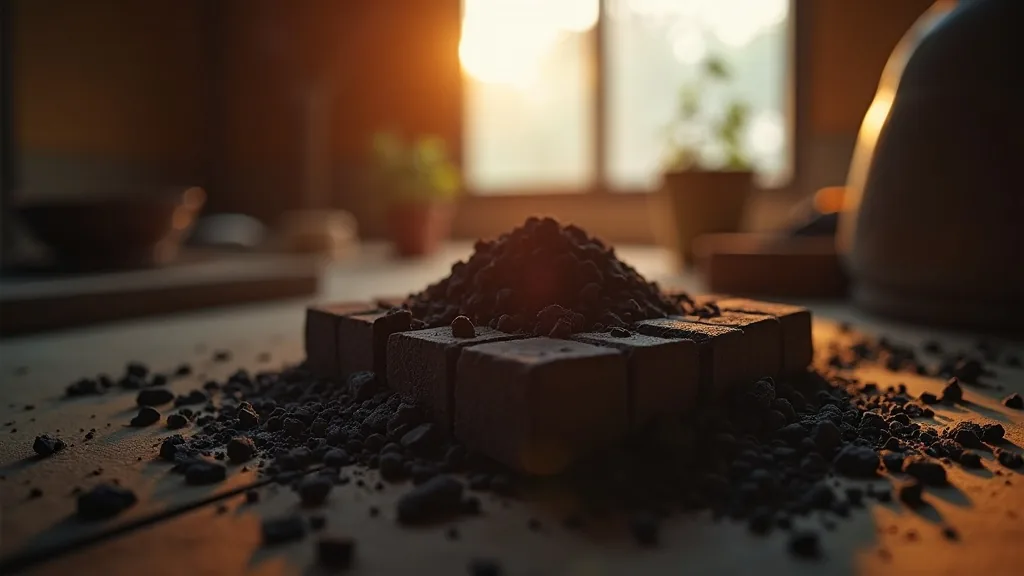
Scope: OEM manufacturing programs — custom cube sizes, packaging engineering, artwork. For launching your own brand identity, see the private-label page.
An OEM shisha charcoal manufacturer in Indonesia produces hookah cubes to your brand’s exact specification — cube size, ash ceiling, inner packaging, printed artwork — then ships them under your label from Javanese ports. Indicative FOB pricing for premium coconut-shell cubes runs USD 1,000–1,600 per metric ton as of 2026, grade and volume dependent; a written quote confirms.
Indonesia is the world’s number-one producer of coconut-shell charcoal briquettes, which is why serious hookah brands manufacture here instead of white-labeling through a middle market. Shisha Charcoal Supplier runs OEM programs through vetted workshops in Central Java — around Magelang, Jepara, Semarang, and the Yogyakarta area — plus plants in Sulawesi, managed end to end from our business-development desk in Bali.
What Does an OEM Program Actually Include?
An OEM project is more than a logo on a box. You are commissioning a product file: a locked cube specification, an engineered packaging stack, approved artwork, and a documentation trail your importer can audit.
| Program element | What you control | Typical options |
|---|---|---|
| Cube format | Size, die, finish | 22–28 mm cubes, custom dies on request |
| Quality band | Ash ceiling, moisture, burn target | Under 2.5% ash marks premium; top grades 1.6–2.2% (typical lab ranges) |
| Inner packaging | Bag type, humidity control | Inner plastic or heat-sealed bag, desiccants |
| Retail unit | 1 kg inner carton | Full-color print, matte or gloss, your dieline |
| Master carton | 10 kg master box | Printed or neutral, palletized or floor-loaded |
| Compliance file | Batch codes, lab data | Per-lot COA covering ash, moisture, fixed carbon on request |
Every element is confirmed in writing before production starts. Ash and burn figures are quoted as typical lab-report ranges, never as blanket promises — that is how honest manufacturing reads.
Which Cube Sizes and Specs Can You Customize?
Indonesian workshops press five standard cube formats, and 25 mm and 26 mm remain the workhorse hookah sizes for lounges worldwide.
| Cube size (mm) | Common use | Notes |
|---|---|---|
| 22×22×22 | Smaller bowls, faster heat-up | Shorter sessions |
| 25×25×25 | Global lounge standard | Quality cubes documented at 90–120 minutes per piece |
| 26×26×26 | Lounge standard, slightly longer burn | Most requested OEM format alongside 25 mm |
| 27×27×27 and 28×28×28 | Heat-management devices, large bowls | Extended sessions |
| Custom | Brand differentiation | New dies quoted per project |
Typical lab-report ranges as of 2026: ash content of 1.6–2.5% with under 2.5% marking premium, moisture at or below 5%, and burn time of 2 to 2.5+ hours per session under controlled conditions. Cubes press with natural binders — low odor, low smoke, spark-free, no chemical accelerants. One 2026 market report puts natural coconut charcoal at 35–55% less ash than quick-light alternatives and projects roughly 7.1% annual growth for the category through 2034.
How Is Your Packaging Engineered?
Packaging is where OEM projects succeed or fail, because pressed charcoal absorbs humidity in transit. The standard Indonesian export stack as of 2026 is a 10 kg master box holding 1 kg inner cartons, with inner-plastic or heat-sealed bag options and desiccants controlling moisture through weeks at sea.
Artwork follows a fixed approval path: we supply the dieline, your designer places the brand files, we return a digital mockup, and nothing prints until you sign off. EU and GCC buyers increasingly ask for REACH-aware documentation and additive declarations in the packaging file — a shift we already build into 2027-facing OEM programs.
What Does OEM Production Cost, and What Is the MOQ?
| Item | Indicative figure (as of 2026) | Notes |
|---|---|---|
| Premium coconut-shell cube, FOB | USD 1,000–1,600 per MT | Indicative, grade and volume dependent; written quote confirms |
| Minimum order | One 20-ft container, ~18–18.5 MT | Unpalletized |
| 40-ft container | ~25.5 MT | Lower freight cost per ton |
| Trial lots | Pallet-scale on request | Flexible MOQ for startup brands is a growing 2027 expectation |
| Payment norms | TT or LC | Commonly 30% deposit, 70% against bill-of-lading copy |
For market context only: published Indonesian supplier listings as of 2026 showed 100% coconut-shell charcoal offered around USD 950 per MT FOB and coconut-wood mixes around USD 550 per MT. Those are observed listings, not our offer — an OEM program adds printed packaging, dieline engineering, QC, and a compliance file that generic listings never carry.
How Does an OEM Project Run From Brief to Loading?
- Project brief. Send destination market, cube size, and target volume through the form on the contact page — the cargo field takes containers or metric tons.
- Spec and written quote. The BD desk returns a locked specification sheet and FOB quote in writing.
- Plain samples. Unbranded cubes ship to your door, or hand over in Bali if you are on the island.
- Artwork and mockups. Dieline out, digital mockup back, revisions until you approve.
- Pre-production approval. Printed cartons and production cubes are photographed and confirmed before the full run.
- Production and QC. The run carries traceable batch codes and a per-lot COA on request.
- Loading and documents. Containers load at Tanjung Mas (Semarang), Tanjung Priok (Jakarta), Tanjung Perak (Surabaya), or Belawan (Medan) with commercial invoice, packing list, certificate of origin, bill of lading, fumigation certificate where required, and MSDS on request.
Plan roughly six to ten weeks from artwork approval to vessel loading as a working assumption — every project is confirmed in writing. Sea freight then adds weeks to the UAE and longer to Europe, and charcoal moves as general cargo by sea while air freight faces restrictions, so brief OEM projects well ahead of Ramadan and festival peaks. Your forwarder confirms carrier and destination rules.
Why Run the Project Through Bali?
Shisha Charcoal Supplier is part of Juara Holding Group — an Indonesian group operating from Bali across Indonesia since 2015. Production stays in Java and Sulawesi; Bali is the coordination base for factory visits, sample handovers, and meetings near Ngurah Rai or in Denpasar. As of 2026, buyers are shifting toward protocol-backed specs — per-lot COAs, third-party heavy-metal and PAH testing, traceable batch codes — and we structure OEM files to meet that bar from the first run.
Start Your OEM Project Brief
Tell the Juara Holding Group BD desk three things — destination market, cube size, and target volume — and you get a written OEM proposal covering spec, packaging, and indicative FOB pricing.
- WhatsApp: +62 811-3941-4563
- Email: [[email protected]](mailto:[email protected])
- Form: use the project-brief form on the contact page; the cargo field carries your volume so the first reply already talks numbers.
Frequently Asked Questions
Can a startup brand order OEM shisha charcoal below one full container?
Sometimes. The common minimum as of 2026 is one 20-foot container, roughly 18–18.5 metric tons unpalletized, but pallet-scale trial lots exist and flexible MOQ programs for startup brands are a growing 2027 expectation. Printed packaging carries print-run minimums, so per-kilogram cost rises on small trials. State your realistic volume in the brief and the quote reflects it honestly.
How long does an OEM production run take in Indonesia?
Plan roughly six to ten weeks from artwork approval to vessel loading as a working assumption, confirmed per project in writing. Sea freight then adds weeks to the UAE and longer to Europe. Because charcoal ships as general cargo by sea and demand spikes before Ramadan and festival seasons, brief your OEM project at least one quarter ahead of your launch date.
Who owns the artwork and packaging design in an OEM deal?
You do. Dielines carry your brand files, and ownership of artwork and any custom cube die is written into the agreement before production — designs are never reused across brands. Keep your source files; we archive approved print proofs per batch so reorders match the original run exactly. Custom dies are quoted per project with terms stated up front.
Do OEM orders include lab reports under my brand?
Per-lot COAs covering ash, moisture, and fixed carbon are available on request, with typical 2026 ranges of 1.6–2.5% ash and moisture at or below 5% — quoted as lab-report ranges, not promises. Third-party heavy-metal and PAH testing can be arranged, which matters because EU and GCC buyers increasingly demand protocol-backed files heading into 2027.
Can I combine two cube sizes in one OEM container?
Yes, mixed loading is common — for example a 25 mm and 26 mm split inside one 20-foot container of about 18–18.5 metric tons. Each size and each artwork variant carries its own production minimum, so state the split in your brief. The written quote then prices each grade separately, and batch codes keep the two lines traceable.